
SynchresisVM
Virtualization you own outright.
It works on Linux and FreeBSD, using KVM or bhyve behind a common interface
What it does
Two hypervisors, one interface
KVM on Linux and bhyve on FreeBSD, managed the same way. Most control planes make you choose an operating system first and a hypervisor second; this one does not care which side of that line a host sits on.
An API, not just a console
Every operation is a REST call. Authenticate once, then create a guest, attach a disk, start it or move it from a script. Your runbooks become code instead of a sequence of clicks somebody has to remember.
Built for more than one node
Guests are defined centrally and run wherever there is room. Move a workload between hosts without rebuilding it or recreating its configuration by hand.
Shared storage
Nodes work from a common pool, so relocating a guest does not begin with copying its disks across the network and waiting.
Placement that looks after itself
A balancer keeps guests spread across the cluster rather than leaving you to work out by eye which host still has headroom.
Standard formats throughout
qcow2 disks, VirtIO devices, Linux bridges. A disk taken out of SynchresisVM is an ordinary qcow2 file that any other hypervisor will read.
Migrating from another Hypervisor?
Whether you're migrating from Proxmox, Hyper‑V, or VMWare, our easy migration wizard handles all the heavy lifting!
Software, not an appliance
It installs on a Linux or FreeBSD host you already administer, with the packages you already patch. There is no vendor image to adopt and no separate lifecycle to track.
Yours to run
No per-socket pricing and no support contract standing between you and a feature you have already paid for.
Screenshots
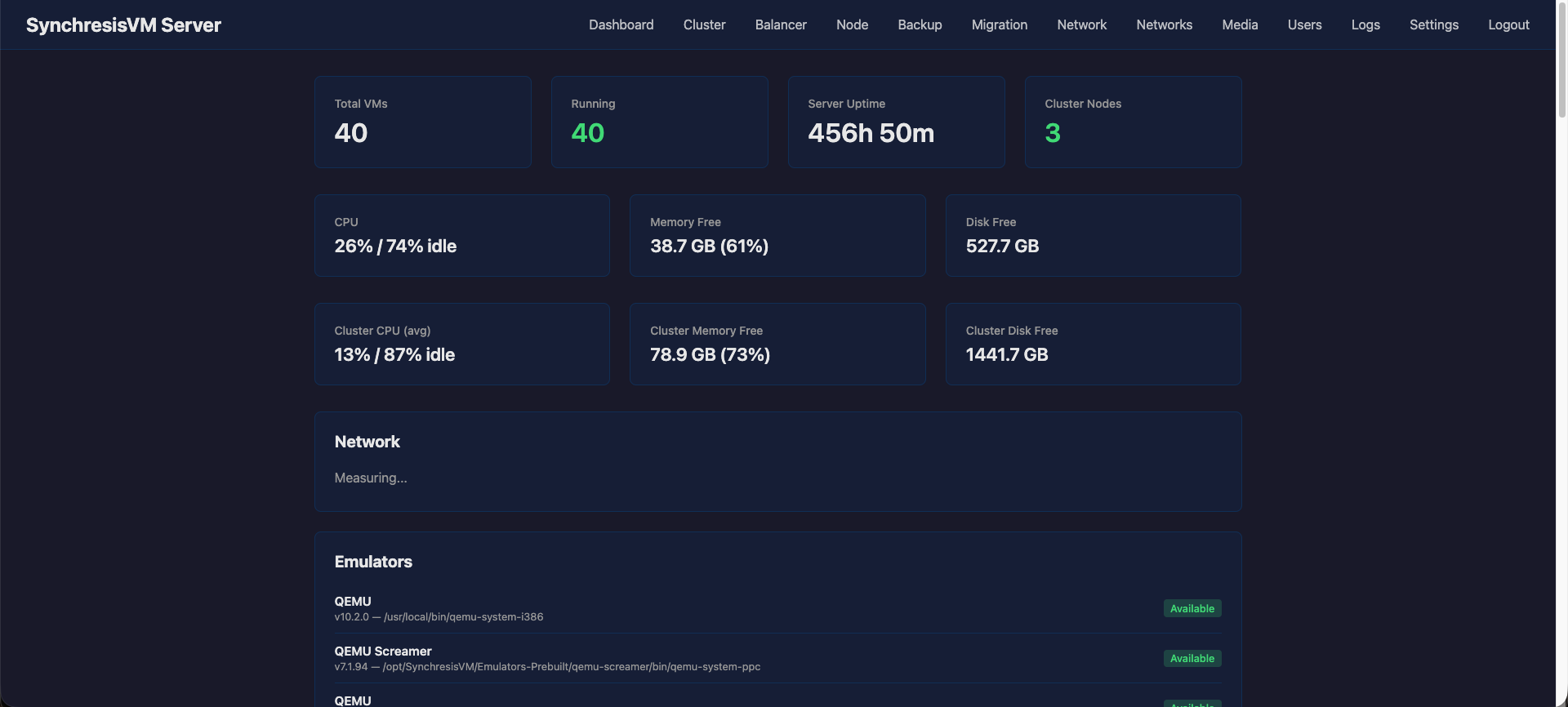
Dashboard
Cluster-wide CPU, memory and disk at a glance, with the available emulators.
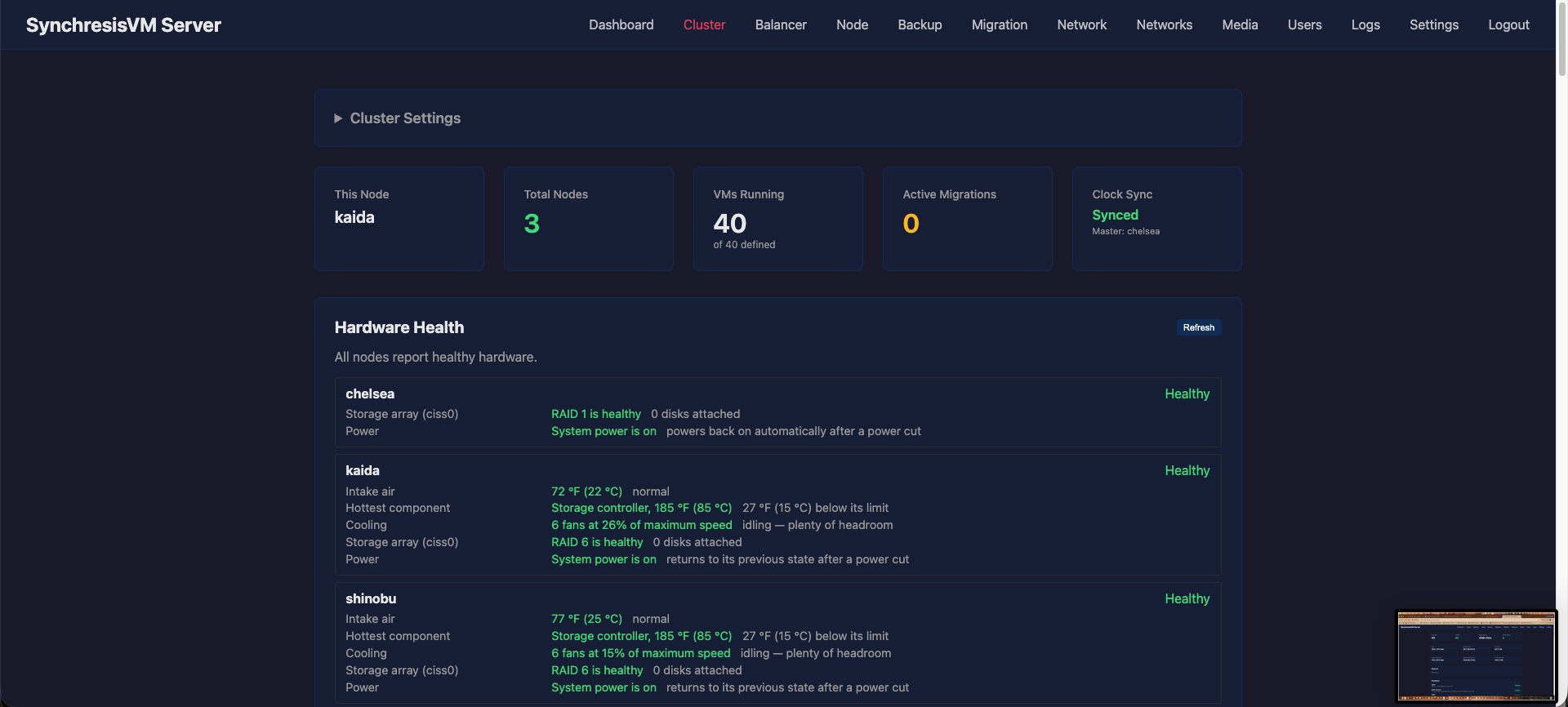
Cluster
Per-node hardware health: temperatures, fans, RAID and power state.
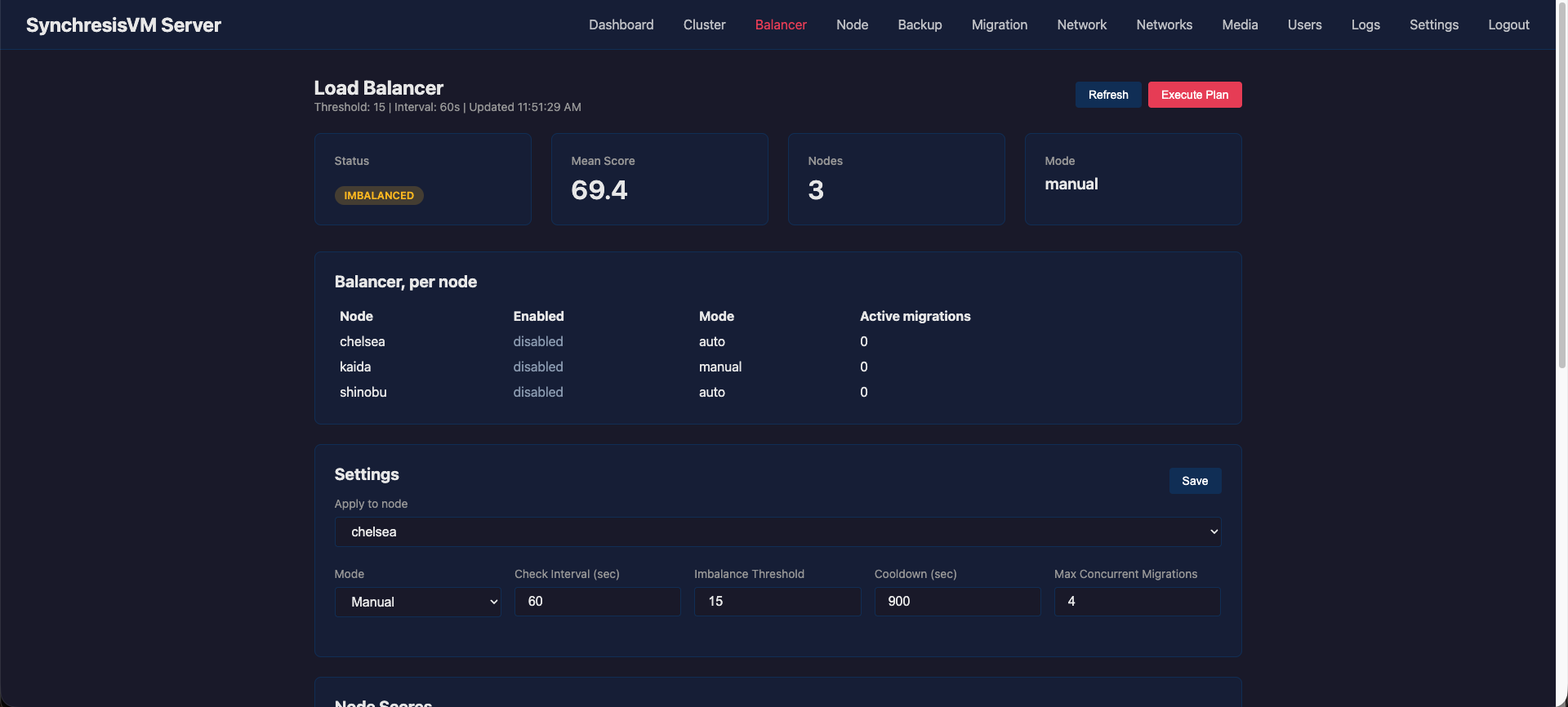
Load balancer
Scores each node and proposes migrations, manually or automatically.
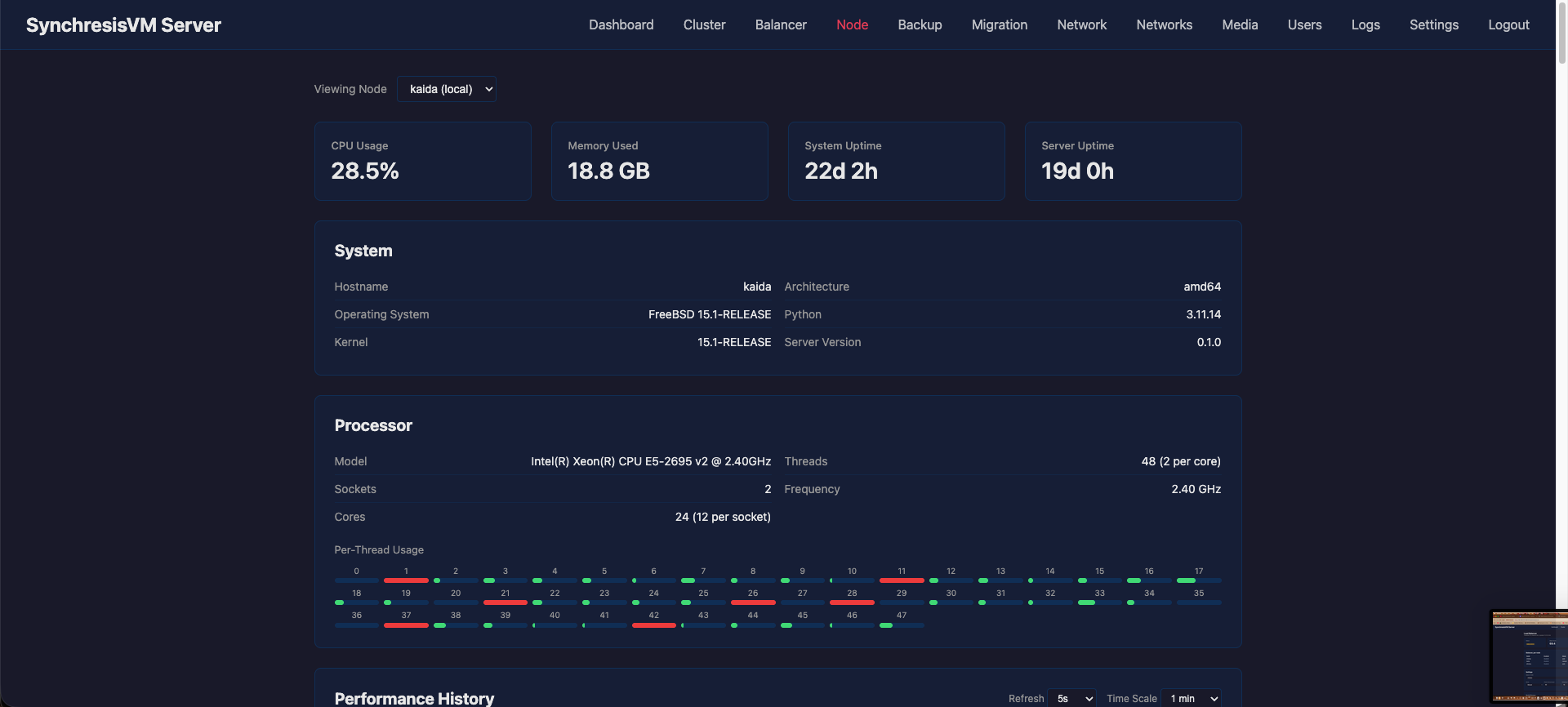
Node
Per-thread CPU usage and system detail for a single host.
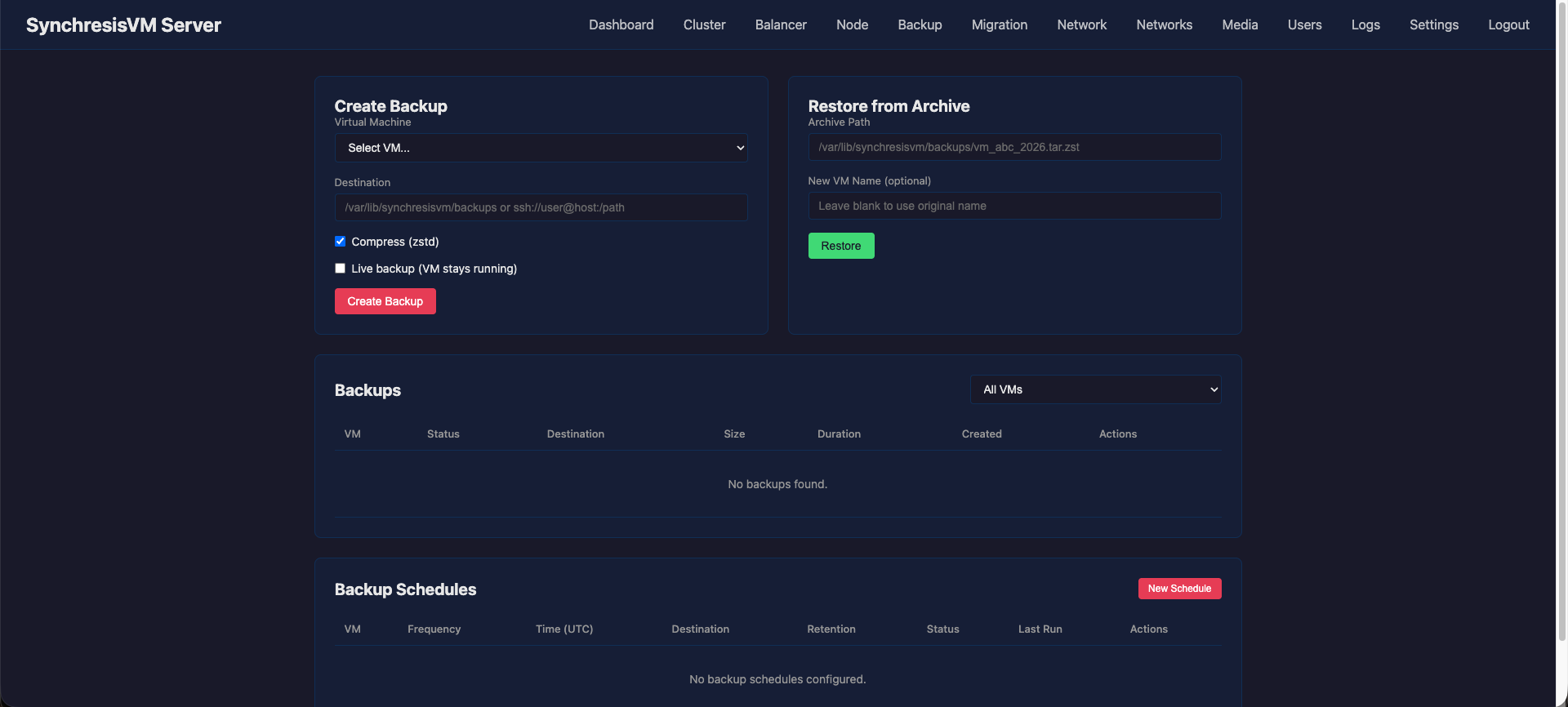
Backup
Live or cold backups, compressed, on a schedule or on demand.
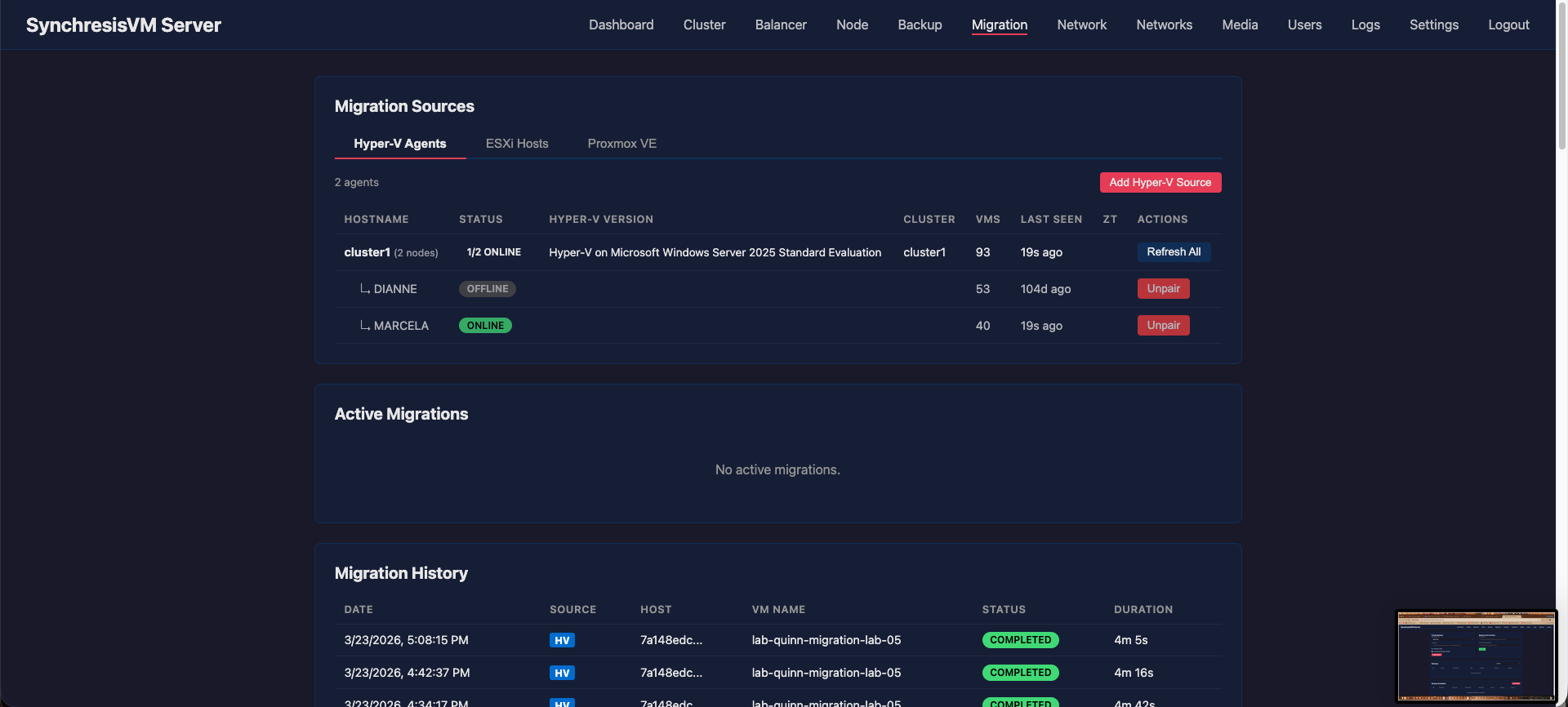
Migration
Imports running guests from Hyper-V, ESXi and Proxmox.
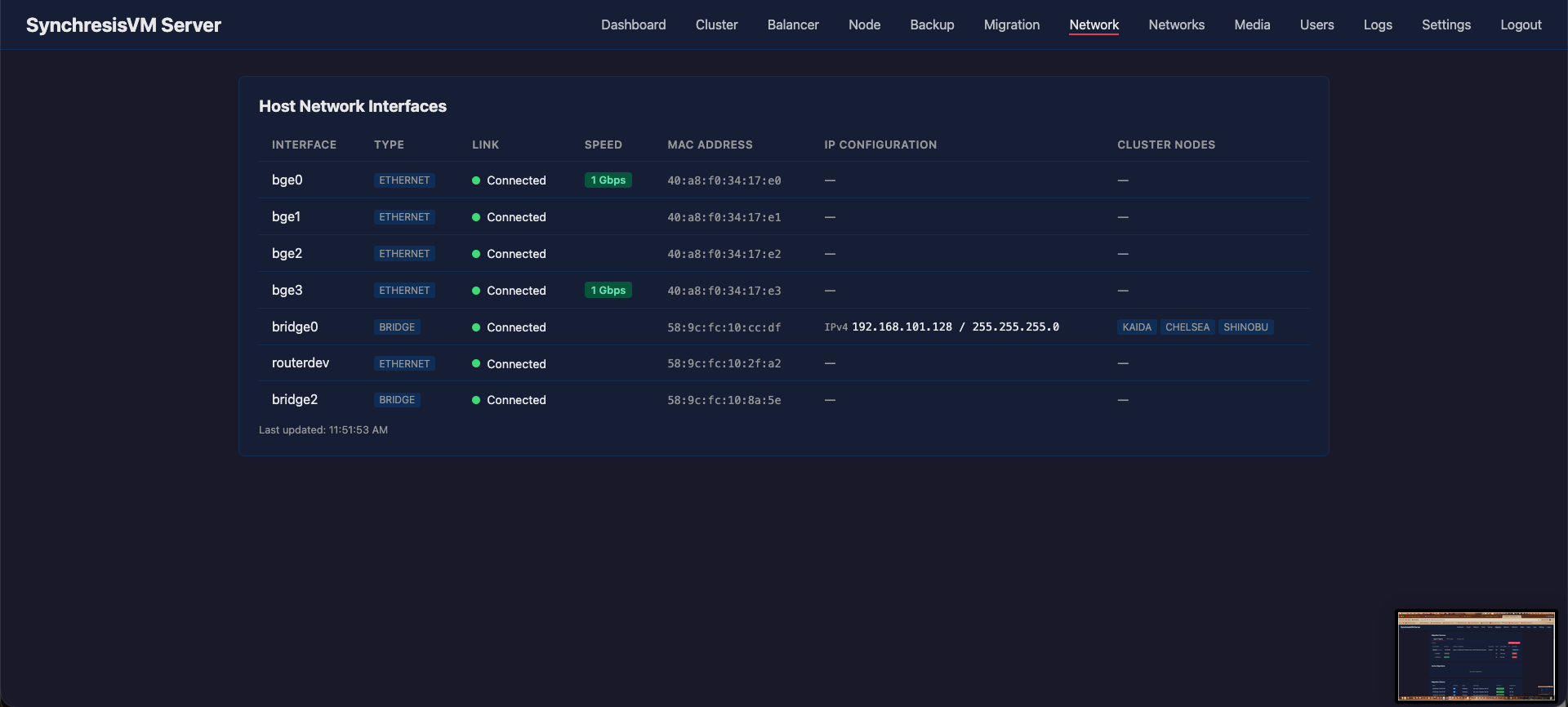
Network
Physical interfaces, link speed and which bridges carry the cluster.
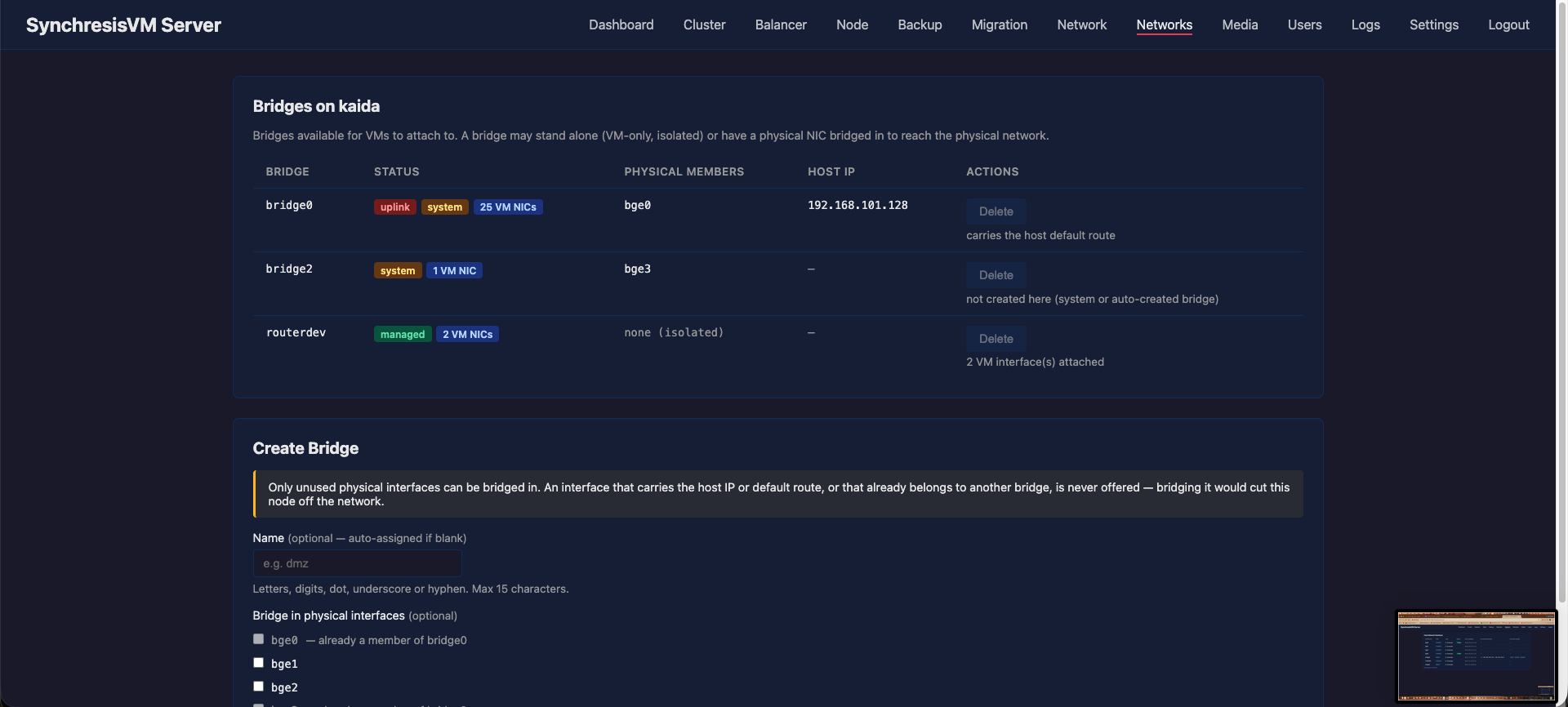
Bridges
Create and manage bridges without cutting the host off the network.
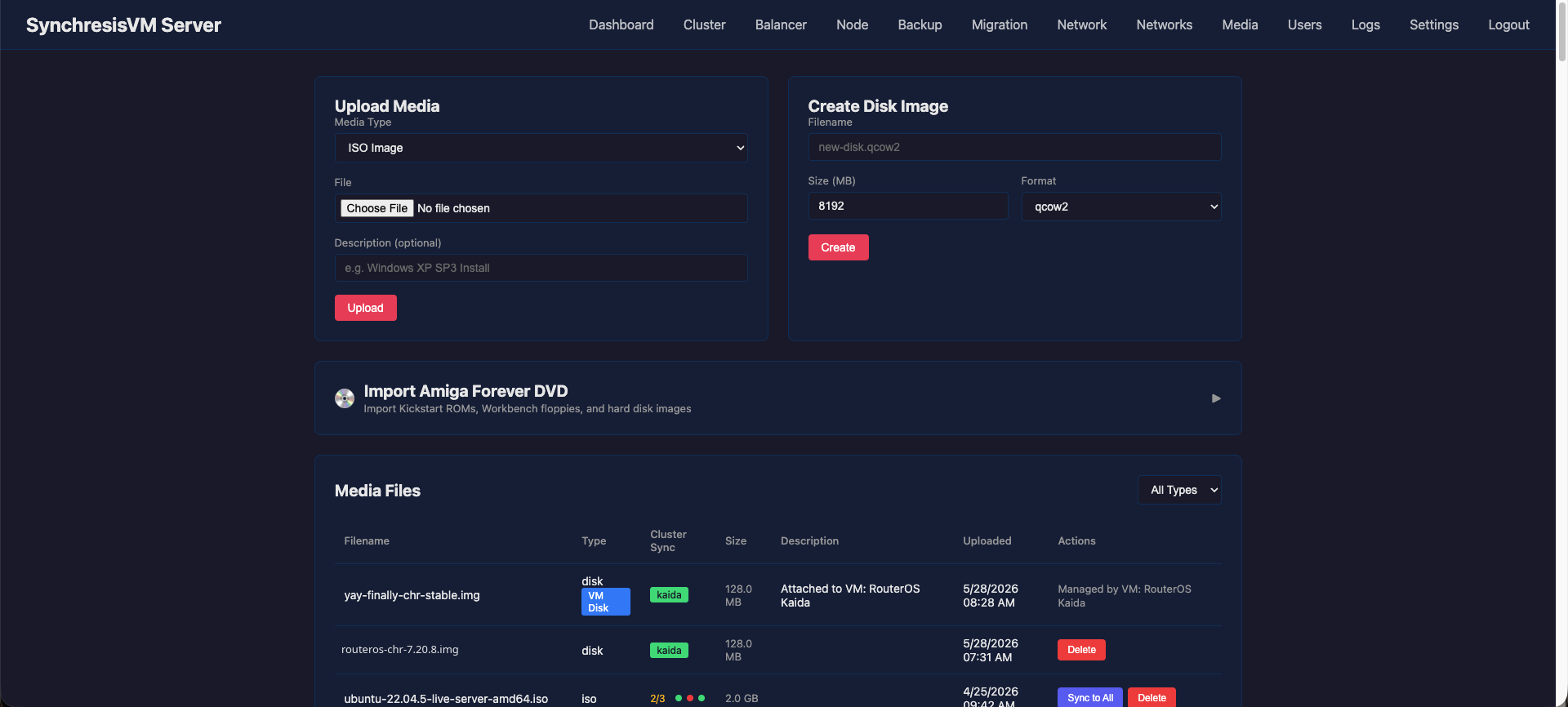
Media
ISOs, disk images and Amiga Forever imports.
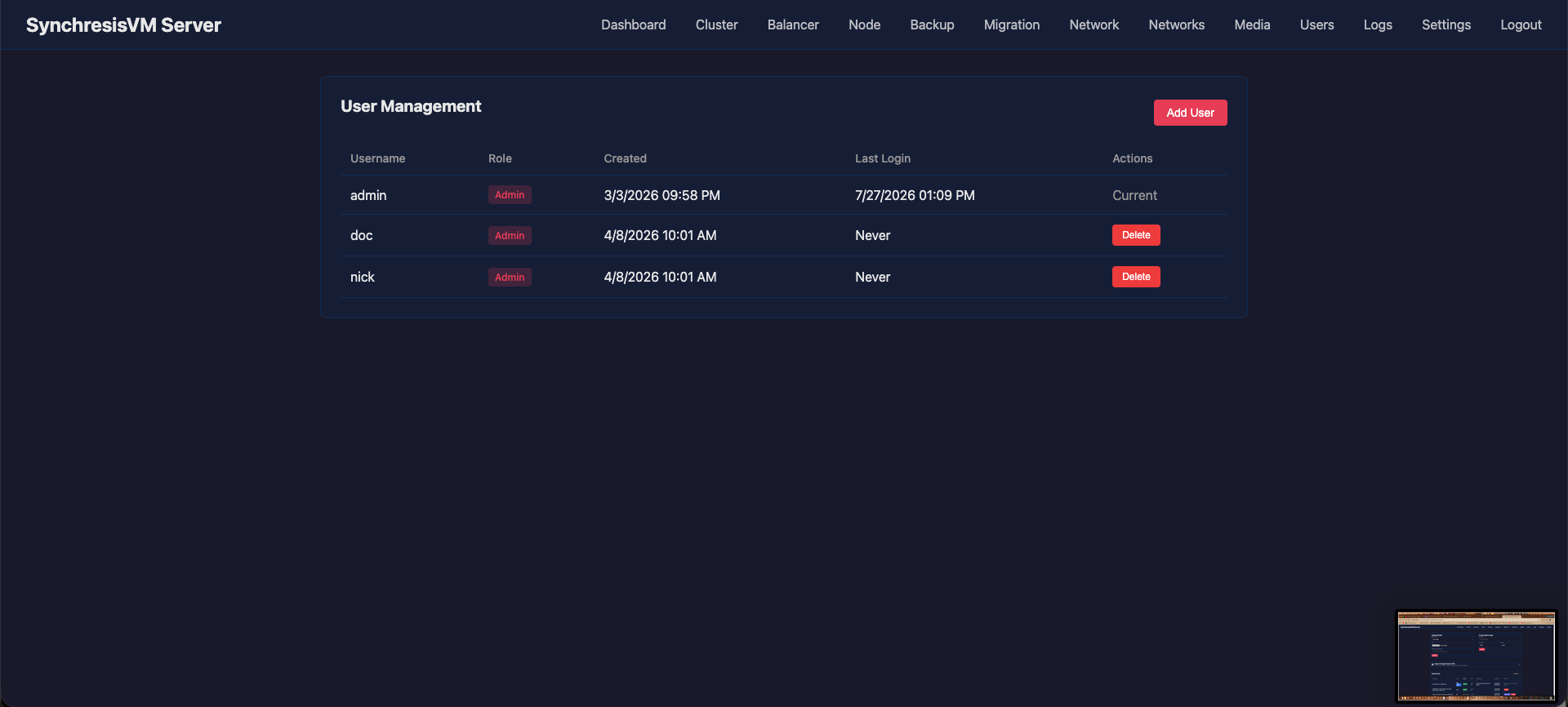
Users
Local accounts and roles.